Residential lighting levels: footcandle targets by room, the lumens that deliver them, and the one number the code requires
Residential lighting in the United States is planned in footcandles, the light landing on a surface, and bought in lumens, the light a bulb emits. This article gives the footcandle ranges attributed to the Illuminating Engineering Society for each room, converts them to lumens for typical room sizes, and adds the single illuminance figure the International Residential Code mandates.
What is the difference between a footcandle, a lux, and a lumen?
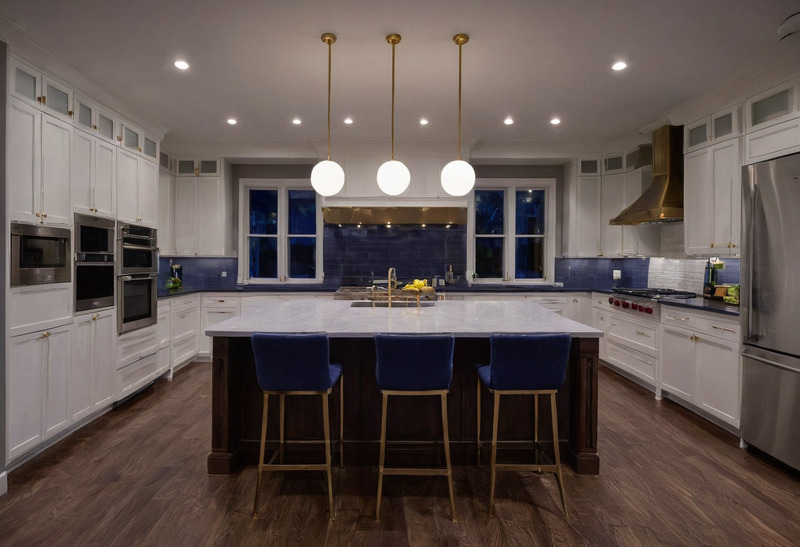
A footcandle is the illuminance produced by one lumen spread over one square foot, a lux is one lumen spread over one square meter, and a lumen is the total light a source emits, so a room target in footcandles multiplied by floor area in square feet gives the lumens the fixtures in that room must deliver. One footcandle equals 10.764 lux, which is why a 10 to 20 footcandle range appears as 108 to 215 lux in tables that print both units (Super Bright LEDs, IES Residential Recommended Lighting Levels).
The Illuminating Engineering Society, an ANSI-accredited standards developer, publishes its recommended illuminance criteria in the IES Lighting Handbook and in recommended practices sold through its store, so the free tables on the web are reproductions by lighting vendors and utilities rather than the standard itself. Two of those reproductions are used on this page: a residential table published by the retailer Super Bright LEDs that cites the IES, and the Elite Lighting compilation of IES footcandle ranges that cites the IES Lighting Handbook (Elite Lighting, IES Footcandle Recommendations). A third guide, produced by the Lighting Design Lab in Seattle with Energy Trust of Oregon in 2013, states that its figures come from the 10th edition of the IES Lighting Handbook and assume that at least half the users are between 25 and 65 years old, a reminder that IES recommendations rise for older eyes (Lighting Design Lab, Footcandle Light Guide).
What footcandle level does each room in a house need?
The residential ranges attributed to the IES put living rooms and dining rooms at 10 to 20 footcandles, bedrooms and bathrooms at 20 to 50, general kitchen lighting at 20 to 50, kitchen preparation and cooking surfaces at 50 to 100, hallways at 5 to 10, and laundry and workshop areas at 20 to 100, with a single 30 footcandle figure for basement exercise and recreation space. The wide spread inside each range is deliberate: the low end is ambient light for moving through the room, and the high end is task light on the surface where reading, chopping, sewing, or shaving happens.
The commercial and hospitality tables in the Elite Lighting compilation line up with the residential figures where the tasks match: hotel bedrooms for reading are 20 to 50 footcandles, hotel bathrooms 20 to 50, corridors, elevators, and stairs 10 to 20, food-service kitchens and preparation 50 to 100, dining 5 to 20, and reading and working areas in a lobby 20 to 50. The Lighting Design Lab guide lists an open office at 30 to 50 footcandles measured 30 inches above the floor, which is the range a home office desk should meet, and a restroom at 7.5 to 30.
| Room or task | Footcandles | Lux |
|---|---|---|
| Living room, general | 10 to 20 | 108 to 215 |
| Dining room | 10 to 20 | 108 to 215 |
| Bedroom | 20 to 50 | 215 to 538 |
| Bathroom, general | 20 to 50 | 215 to 538 |
| Kitchen, general | 20 to 50 | 215 to 538 |
| Kitchen counters, cooking | 50 to 100 | 538 to 1,076 |
| Difficult reading and writing | 50 to 100 | 538 to 1,076 |
| Hallway | 5 to 10 | 54 to 108 |
| Laundry | 20 to 100 | 215 to 1,076 |
| Workshop | 20 to 75 | 215 to 807 |
The kitchen and bathroom figures reward a layered scheme rather than a brighter ceiling fixture, and the NKBA's bathroom guideline that places vanity task lights beside the mirror at eye level, described in the article on NKBA kitchen and bath planning guidelines, is the practical way to hit 50 to 100 footcandles on a face without lighting the whole room to that level.
How many lumens does a room need to reach its footcandle target?
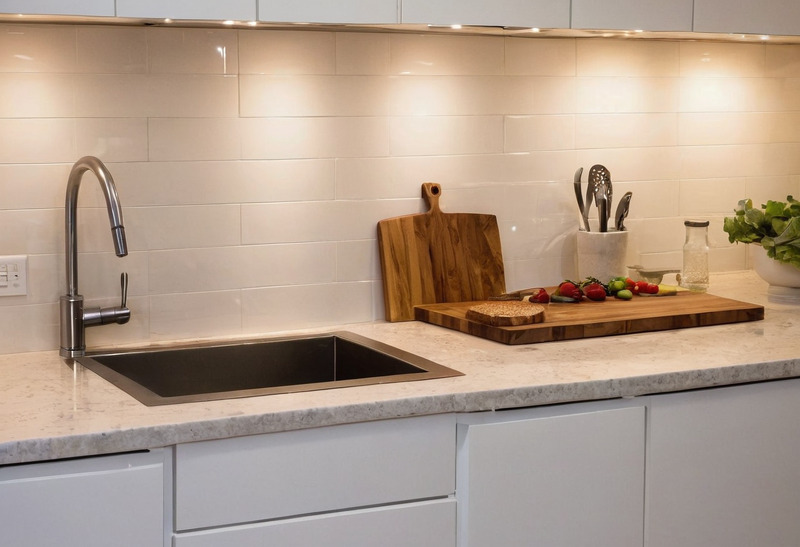
A room needs lumens equal to its floor area in square feet multiplied by its footcandle target, so a 12 by 14 foot bedroom of 168 square feet needs 3,360 lumens to reach 20 footcandles and 8,400 lumens to reach 50, before any allowance for fixture losses, wall color, or ceiling height. Super Bright LEDs works the same formula through a kitchen and a bathroom: a 12 by 16 foot kitchen of 192 square feet at 40 footcandles needs 7,680 lumens of general light, plus 30 square feet of counter at 70 footcandles needs 2,100 lumens of task light, for 9,780 lumens; an 8 by 10 foot bathroom of 80 square feet at 30 footcandles needs 2,400 lumens, plus 10 square feet of vanity at 80 footcandles needs 800, for 3,200 lumens.
The formula assumes an 8 foot ceiling and light walls. The same guide advises raising the lumen budget in proportion to ceiling height above 10 feet, adding 10 to 20 percent for dark or matte walls that absorb light, and using narrower beam angles under vaulted ceilings so the light reaches the work plane. Dimmers turn a high installed budget into a range, which is why the guide recommends installing toward the top of the range on dimmable circuits and starting low.
| Room | Size | Target | Lumens needed |
|---|---|---|---|
| Bedroom | 12 by 14 ft, 168 sq ft | 20 fc | 3,360 |
| Bedroom | 12 by 14 ft, 168 sq ft | 50 fc | 8,400 |
| Kitchen, general | 12 by 16 ft, 192 sq ft | 40 fc | 7,680 |
| Kitchen counters | 30 sq ft of counter | 70 fc | 2,100 |
| Bathroom, general | 8 by 10 ft, 80 sq ft | 30 fc | 2,400 |
| Vanity | 10 sq ft | 80 fc | 800 |
| Hallway | 4 by 12 ft, 48 sq ft | 10 fc | 480 |
Which bulbs deliver those lumens and what do they cost to run?
A traditional 60 watt incandescent bulb produces about 800 lumens, and an LED bulb produces the same 800 lumens on about 9 watts, according to the Federal Trade Commission's consumer guidance, which also explains that since 2011 the Lighting Facts label on every bulb package has listed brightness in lumens, estimated yearly energy cost, expected life, light appearance, wattage, and mercury content (Federal Trade Commission, Shopping for Light Bulbs). The Department of Energy's consumer guide states that lighting accounts for about 15 percent of an average home's electricity use, that LEDs use up to 90 percent less energy and last up to 25 times longer than incandescent bulbs, and that the average household saves about $225 a year in energy costs by using LED lighting; its worked example matches a 75 watt incandescent to a 1,100 lumen LED drawing as little as 9 watts as a screw-in bulb or 12 watts as a recessed fixture (U.S. Department of Energy, Consumer Guide to Energy-Efficient Lighting, 2021).
The Natural Resources Defense Council's light bulb guide tabulates the four common brightness classes with the wattage and yearly cost of a halogen-type incandescent against an LED, at 3 hours of use per day: 450 lumens costs $3.87 a year on a 29 watt incandescent and $0.67 on a 5 watt LED; 800 lumens costs $5.74 on 43 watts or $1.34 on 10 watts; 1,100 lumens costs $7.08 on 53 watts or $1.60 on 12 watts; and 1,600 lumens costs $9.62 on 72 watts or $2.27 on 17 watts, with a typical life of 1 year for the incandescent and 15 to 25 years or more for the LED (NRDC, Your Guide to More Efficient and Money-Saving Light Bulbs). The 3,360 lumen bedroom above, lit by four 800 lumen LEDs, therefore costs about $5.36 a year in electricity at those assumptions, against $22.96 for the incandescent equivalents.
| Old bulb | Lumens | Incandescent watts and yearly cost | LED watts and yearly cost |
|---|---|---|---|
| 40 W | 450 | 29 W, $3.87 | 5 W, $0.67 |
| 60 W | 800 | 43 W, $5.74 | 10 W, $1.34 |
| 75 W | 1,100 | 53 W, $7.08 | 12 W, $1.60 |
| 100 W | 1,600 | 72 W, $9.62 | 17 W, $2.27 |
What color temperature and color rendering index should home lighting have?
Color temperature in kelvins describes the appearance of white light from warm to cool, and the U.S. Energy Information Administration places lamps of around 2,500 to 3,500 kelvin closest to traditional incandescent and halogen bulbs, with slightly orange tones, while sunlight and some fluorescent lamps sit at higher, bluer values. The same EIA analysis explains the color rendering index: for bulbs below 5,000 kelvin the index treats an incandescent lamp as essentially 100, and the more a color sample deviates from its appearance under incandescent light, the lower the CRI, with the ENERGY STAR specification requiring a CRI of at least 80 (U.S. Energy Information Administration, LED light bulbs keep improving in efficiency and quality).
The Department of Energy guide adds the shopper's rule of thumb: higher kelvin numbers mean cooler, bluer light, lower numbers mean warmer light, and the warm yellow end most resembles incandescent lighting, which is the range most people prefer in living rooms and bedrooms. The Lighting Facts label prints light appearance on a warm-to-cool scale, so a designer can specify a single kelvin value for a whole floor and check it at the store. Wood, wool, and skin tones look flat under a low CRI, which is why the 80 minimum matters more in a dressing area or over a dining table than in a garage.
What lighting level does the International Residential Code actually require?
Section R303.7 of the 2021 International Residential Code requires an artificial light source that can light the treads and landings of every interior stairway to at least 1 footcandle (11 lux), measured at the center of each tread and landing, controlled by a wall switch at each floor level wherever the stair has six or more risers, and that single number is the only illuminance the residential code sets. Section R303.8 requires an exterior stairway to have a light at its top landing, and a light at the bottom landing where the stair leads down to a basement from grade, without stating a level (2021 IRC Chapter 3 on UpCodes).
The gap between the code's 1 footcandle and the IES corridor range of 10 to 20 footcandles is the gap between safety and comfort, and stairs are where the two meet most often, because a stair lit to the legal minimum casts tread edges into shadow. The rest of the code's lighting content is about daylight and switching: Section R303.1 requires glazing equal to 8 percent of a habitable room's floor area, and the NKBA bathroom guidelines quote the requirement for at least one wall-switch-controlled light with the switch at the bathroom entrance. Room sizes, glazing percentages, and the other Chapter 3 minimums are collected in the article on residential room dimension standards.
How does a designer turn these numbers into a lighting plan?
A residential lighting plan starts from the footcandle target for each surface, converts each target to lumens by floor or counter area, assigns those lumens to ambient, task, and accent layers, and then chooses fixtures whose Lighting Facts labels add up to the budget at the specified kelvin and CRI. The vendor guide used on this page describes the three layers plainly: ambient light is the general overhead layer, task light is focused on the work surface, and accent light picks out objects, and it recommends measuring the result with a light meter at several points in the room.
Four checks close the loop on site. Measure the brightest and darkest points on each work surface with a meter and compare them with the table above, because uneven light reads as dim even when the average is high. Confirm that every switch and outlet sits within the 15 to 48 inch reach range, and no higher than 44 inches over a counter, as the article on accessibility clearances under the ADA Standards and ICC A117.1 sets out. Check the stair against the 1 footcandle rule with the meter on the tread center. And keep the Lighting Facts labels, because the lumen, kelvin, and CRI figures on them are the only record of what was installed once the boxes are gone.
Questions and answers
- How many footcandles does a kitchen need?
- Residential lighting tables attributed to the Illuminating Engineering Society give 20 to 50 footcandles for general kitchen lighting and 50 to 100 footcandles on preparation and cooking surfaces. The IES Lighting Handbook range for food preparation in food service settings is the same 50 to 100 footcandles.
- How many lumens does a 12 by 14 foot bedroom need?
- A 12 by 14 foot bedroom covers 168 square feet. At the 20 footcandle low end of the 20 to 50 footcandle bedroom range, the room needs 168 times 20, or 3,360 lumens, which four 800 lumen bulbs (the 60 watt equivalents) supply. At 50 footcandles the room needs 8,400 lumens.
- What is the only lighting level the International Residential Code requires?
- Section R303.7 of the 2021 IRC requires an artificial light source able to light interior stair treads and landings to at least 1 footcandle (11 lux) measured at the center of each tread and landing, with a wall switch at each floor level where the stair has six or more risers.
- How many lumens replace a 60 watt bulb?
- About 800 lumens. The Federal Trade Commission's consumer guidance states that a traditional 60 watt incandescent bulb produces about 800 lumens and that an LED delivers the same 800 lumens on about 9 watts. The NRDC guide lists 450 lumens for a 40 watt, 1,100 for a 75 watt, and 1,600 for a 100 watt equivalent.
- What color temperature and CRI should home lighting have?
- The U.S. Energy Information Administration describes lamps of roughly 2,500 to 3,500 kelvin as closest to incandescent light, with higher kelvin values appearing bluer, and notes that the ENERGY STAR specification requires a color rendering index of at least 80. Kelvin and CRI both appear on the Lighting Facts label.